

How to apply emotional intelligence during conflict situations

Top tips to secure positive outcomes from challenges.
Today’s world is a place of diversity. People with many differences live and work within the same environment and as a result, conflicts are unavoidable. When conflict is not being managed promptly, it can very quickly deteriorate and negatively affect communication, relationships, and productivity.
If we understand our mind and the contributing factors for conflict, we can effectively deal with challenges and turn dysfunctional situations into positive outcomes. Following is a fantastic tool to help us understand how we tick, relate to other people, respond to their needs and achieve positive results from adversity.
So, how does the mind work?
The process begins with an EXTERNAL EVENT that we experience with our five senses. Our sensory input channels (five senses) are exposed to around 2 million bits of information each and every second. To avoid overwhelm and to make sense of the world, our brain DELETES, DISTORTS AND GENERALISES information, deleted down to around 134 bits which are then chunked into about seven chunks of information.
We have several filters for this information flood, some of which are our values, drive, past experiences, and beliefs we hold in our thought process. Our beliefs (often referred to as our judgement filter) are feelings of certainty about what something means and what we consider is right or wrong; our values are emotions that we want to fulfil; and our experiences (attached to negative or positive emotions) are anything that has happened in our life until now.
This ongoing process of how we filter in information and our THOUGHT process creates an INTERNAL REPRESENTATION, in other words a sensory perception – a picture with sound, emotions, feelings, smell and taste, which influences our EMOTIONAL STATE, because psychology creates physiology, and physiology creates psychology.
The next step in the process is how we make DECISIONS, which is influenced by how we think and feel.
And based on the quality of our decisions, we display our ACTIONS & BEHAVIOURS which ultimately determine the quality of the RESULTS we achieve. We call this process, from perception to results, the Meta Communication Model.
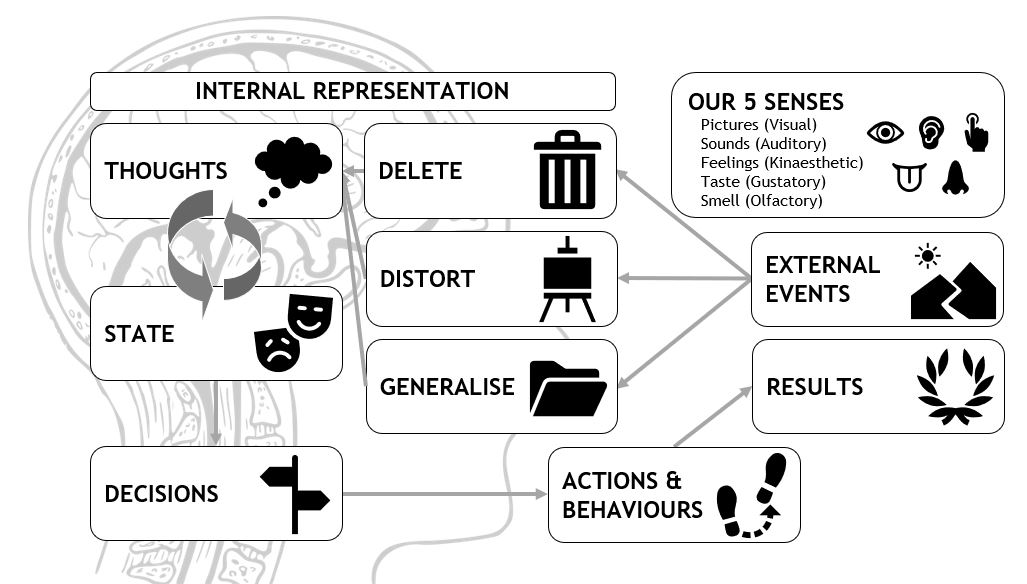
It is fascinating to know that an average of around 7 chunks out of 2 million bits of information becomes our reality! This explains why no two people can view the same event and recall it in the exact same way; their minds have trained themselves to delete (what they unconsciously decide is not relevant) and distort (so it fits in with what they are familiar with) and generalise (draw conclusions based on a few experiences). The true reality consists of much more information than we consciously perceive, and our internal representation cannot possibly contain the reality itself. “The reality that we experience is largely determined by what we do inside our heads.” Therefore, PERCEPTION = REALITY.
“Everyone’s model of the world is as unique as their thumb print”.
~ Dr Milton Erickson
So, how does this relate to Emotional Intelligence and to successfully managing conflict? The truth is that ‘managing conflict’ isn’t necessarily something that occurs DURING a challenging situation, but much rather how we equip ourselves with the necessary tools BEFORE these occurrences to handle them swiftly and calmly, with a high level of EI.
And to do that, we can simply change anything that happens before the behaviours are created. Giving a situation or event, a more positive meaning will create positive emotions that support positive actions and behaviours, which ultimately create positive outcomes and results.
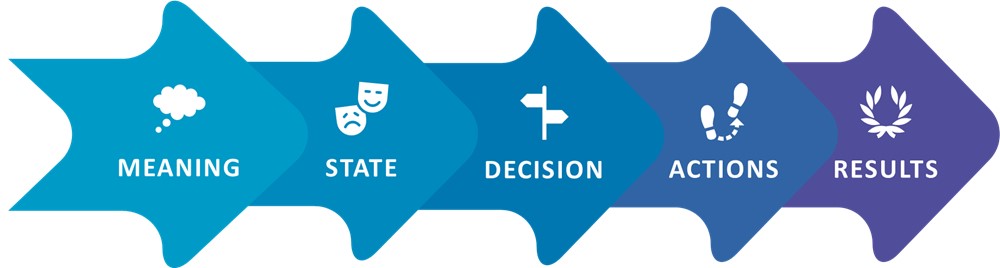
“Nothing in life has any meaning, except the meaning we give it”.
~ Tony Robbins
The ultimate question: How do we change what happens before the behaviours are created? These are my top tips:
Separate the person from the behaviours
The knowledge and appreciation that everybody perceives situations in a very different way certainly assists us when dealing with conflict. We must separate people from their behaviours and accept that:
Behaviour is NOT who we are. Behaviour is what we do.
What we can observe about another person – their behaviour (what they do and say) – is the tiniest tip of a massive iceberg. Shifting your focus to what lies underneath rather than buying into the person’s behaviours allows you to stay objective during the interaction, as opposed to being affected and reacting to conflict.
Accept the person, and calibrate their behaviours
When we or other people behave in weird ways, don’t judge and instead look beyond the behaviours and ask yourself what’s triggering it and what they try to achieve. Accept the person and calibrate their behaviours.
Accepting the person doesn’t mean that we view their behaviour as positive. We may even find it quite disrespectful. However, we need to look beyond it and find out what happened beforehand to pinpoint the triggers.
Appreciate the positive intention
The key to getting to the bottom of the behaviour or conflict situation is to appreciate the other person’s positive intention. Remember; the behaviour is what happens last! We all do the best we can with the resources we have available at the time; if we could do better, we would. For example, if someone is getting tense with you, that person may feel misunderstood, insignificant or not listened to at the time, which causes the undesirable behaviour and ultimately the conflict.
No matter how strange, hurtful or inappropriate a person’s behaviour may seem to you; to the person engaging in that behaviour, it makes sense within their model of the world. They see the behaviour as the best or only way of meeting their need or achieving their outcome.
Positively achieve the needs
Once we have a good understanding of their positive intention, we can explore alternative, better ways to help them achieve their needs.
If for example somebody is becoming aggravated, they might feel misunderstood, insignificant or not listened to. If we pay more attention to what they are saying, start asking questions and give them our full attention to acknowledge their values, needs, and expectations, there is no longer a need for this behaviour.
If we can see challenges in a different light, we can boost our personal and social capabilities and connect with others. This Emotional Intelligence skill in turn will improve our ability to successfully deal with conflict and lead with positive influence.
“Dare to make a difference!”