

The Role of Universities in The Talent Economy
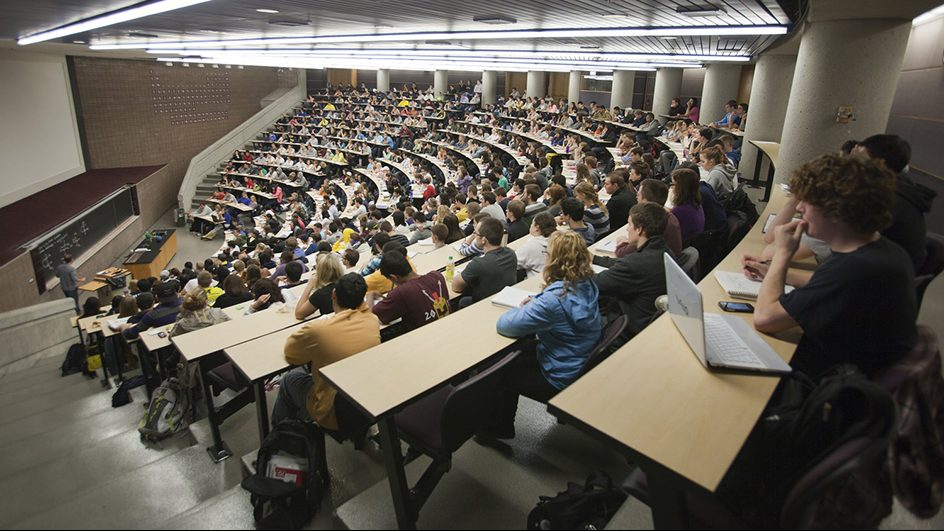
The National Association of Distance Education and Open Learning (Nadeosa) celebrated its 21st anniversary at its annual conference at the University of Free State in Bloemfontein from 19-21 July 2017. Nadeosa is an association focusing on promoting open learning, and therefore plays a vital role in building talent by means of distance and open learning. However, given the speed of transformation in business, education and society, the question can be asked whether universities are winners or losers in the talent economy. Or put differently: Do universities play their rightful role in the talent economy as producers of talent? To address this question, the Nadeosa conference included a panel discussion about dismantling the challenges inhibiting post-school education and transformation through open and distance learning.
Representing the human resource (HR) and business perspective, I was asked to participate in the panel to offer a perspective on business needs regarding open learning. Given the fact that HR Managers are the first point of contact for most students entering the business world, I provided some inputs from the HR and business side of the open learning environment.
The university as an institution of learning has meaningful impact on the talent economy. On the talent supply side, universities produce talent for the business world. South African graduates have achieved significant success all over the world. I provided the perspective that universities are currently not leveraging their impact on the talent economy. The following guidelines were shared with delegates at the Nadeosa conference:
- Universities should step up to become knowledge and innovation centres in society (as opposed to the traditional mindset of simply producing graduates for the market);
- Institutions of higher learning must produce competent learners exiting the higher education system so that they are work ready;
- Universities should continue being centres of science and practice. Obtaining the optimum balance is key in this regard;
- The pace of change in business is so fast, that society cannot wait for three years when universities are ready to release students for the labour market. A much shorter and more dynamic learning delivery system is needed – one that can produce regular chunks of learning at a much faster rate than the traditional three year learning cycle;
- There has been too much talk and too little action on work-integrated learning – full integration and action is urgently needed;
- Universities must adapt to the pace of change in the business world by getting programmes approved and implemented at a much faster rate;
- Moving away from the traditional paradigm of providing learners for the corporate world only, universities should adapt and become centres of entrepreneurship and innovation;
- In addition to teaching curricula, universities should actively work towards finding solutions to the current socio-economic problems such as crime, unemployment, poverty, inequality and even dealing with South Africa’s junk status;
- It is time to move beyond the current rhetoric to leverage public-private partnerships in higher-education based on meaningful collaboration and transformation utilising the collective wisdom of multiple stakeholders;
- While universities always looked at the west for wisdom, the time has arrived to study local and African, Asian and other regional models – currently Rwanda and Ethiopia are leading the African continent in innovation;
- Universities should embrace technology by becoming centres of digital innovation by building strong online and mobile learning capability;
- Higher education institutions should leverage social media platforms for daily interaction with learners and society at large;
- Given the growth and quality of professional bodies in South Africa, working much closer with professional bodies can play a key role in improving the provision of relevant higher education academic and industry-focused programmes;
- It has never been more important to put the learner at the centre of the learning process by empowering learners with opportunities for learning, sharing, networking and growth;
- More impact studies should be conducted to evaluate the impact of university programmes;
- Academic programmes should be preceded by proper labour market analysis to ensure that these offerings are relevant to the needs in the labour and business market;
- Innovative solutions should be found in areas where a lack of resources is often put forward as an excuse for not delivering programmes (e.g. most churches are empty for six days a week and could be used as centres of learning during the week).
In the light of the above discussion, it is clear that while universities are in principle effective vehicles for driving the talent economy, the current reality is that this has not yet been achieved. It is not surprising that corporate universities have mushroomed as a solution to addressing the talent needs of business internally. A lot of work still needs to be done to ensure that universities leverage the talent economy. While universities contribute significantly to the supply of talent, in most cases, these efforts are inadequate. Should universities be able to become fully-fledged talent centres, they will be able to play the role of catalyst and provide the talent economy with the skills needed to create thriving talent societies. Working with talent managers in business should be a top priority for all universities. Whether universities will be winners or losers in the talent economy will depend on their ability to redefine their role in modern society and to step up as innovation and change agents in building large talent pools needed to drive economic growth.
Marius Meyer is CEO of the SA Board for People Practices (SABPP), the professional and quality assurance body for human resource management. He is also the vice-chairperson of the Talent Advisory Board of the University of South Africa.