

Calming a threatened business environment with SCARF
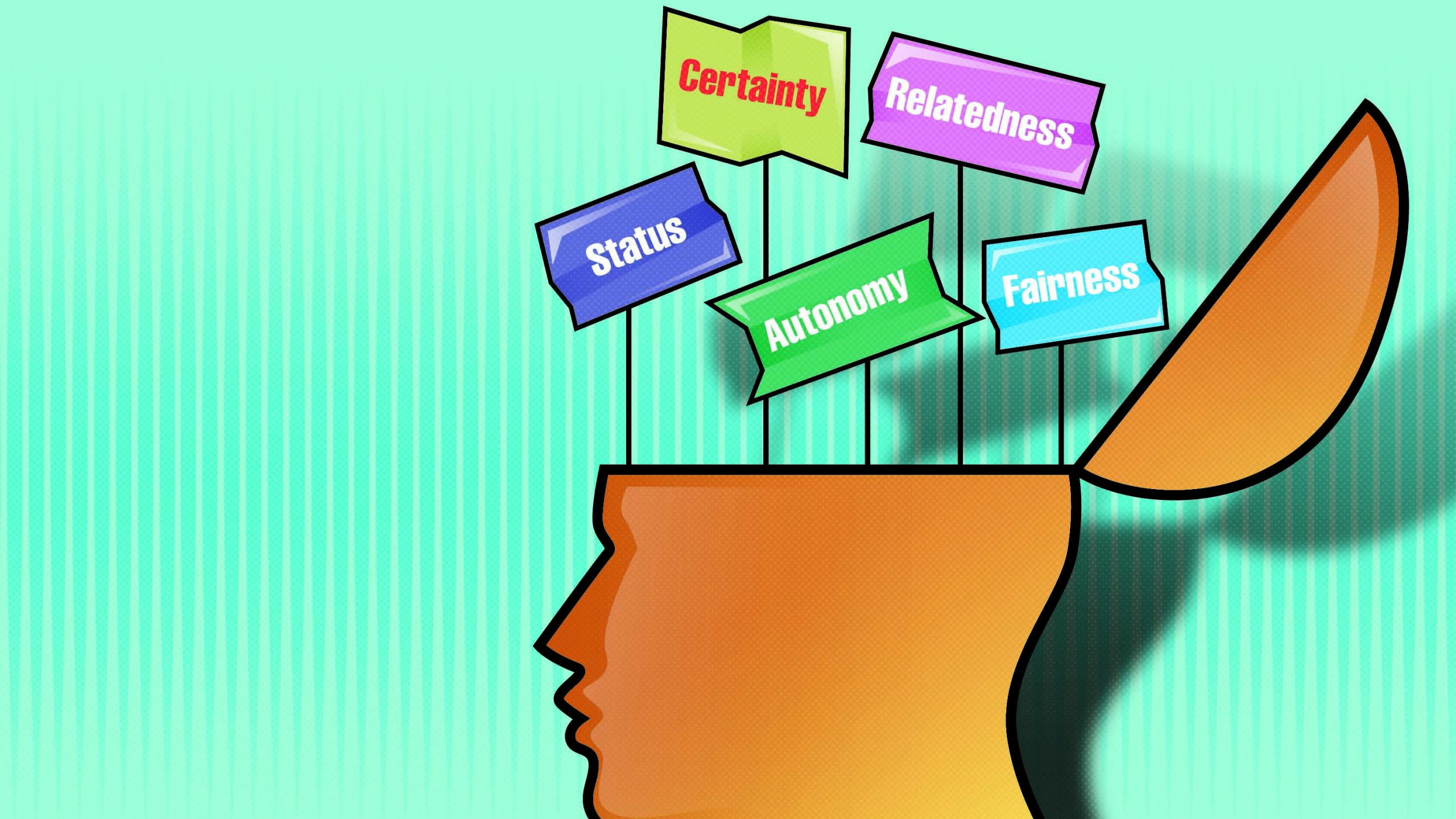
Our world’s have been turned upside down in the past 2 – 3 months. None more so than in the business world. The tentative moves being made towards remote working over the past few years have been brought forward at lightning speed. This has led to mind-blowing changes in our way of being and doing as we come to grips with an environment as we knew it, seemingly imploding.
How has this affected the way we lead and manage in our new, work-from-home, world?
In 2008, David Rock of the NeuroLeadership Institute presented a model to deal with perceived threats in the workplace that should prove useful to leaders and managers dealing with our upturned world. The SCARF model addresses the primitive response we all have to perceived threats. At work, feeling threatened disrupts our creativity, inhibits our problem-solving ability and makes it difficult for us to communicate or collaborate effectively. As humans we don’t like uncertainty or feeling out of control. We like to know that someone has a plan or that we can make our own plans. Uncertainty and lack of control makes life unpredictable and dangerous for us.
Understanding that you and your employees are more than likely feeling this way, right now, the model provides a useful way to assist our management and leadership practices in supporting and influencing your teams as well as building their resilience.
SCARF represents 5 areas of influence on social behaviours:
S – status.
How we offer advice or tell someone what to do can be taken as implying a lower status on them. Managers may feel their status is under pressure in the distance working arrangements to which they have to adhere at present. This can be threatening to many.
C – certainty
Not knowing what is expected of us by our managers or someone acting out of character is also experienced as threatening. Our present uncertain circumstances make this worse.
A – autonomy
This has to do with the perception of control or having choices. Remote working has left most managers feeling that they have lost control of their environment and trust issues need to be dealt with.
R – relatedness
The sense of belonging is strong in all of us. This feeling of connectedness is particularly challenging in our current scenario where we have been forced to work apart.
F – fairness
The hierarchical model of management that we experienced, particularly last century, depended upon a lack of transparency and a command & control approach. Lack of ground rules, and ill-defined expectations can leave our teams feeling unfairly treated. Rules & regulations that appear irrational have the same effect.
So how do we address these threatening perceptions? How do we boost our teams in the current circumstances?
The same area of the brain that deals with threats is the same as the one that recognises rewards. We can manage the current environment better by:
- Affirming everyone’s status by giving positive feedback and acknowledging good performance. This elevates our teams’ sense of contribution and, by extension, their sense of belonging.
- Instilling an atmosphere of certainty by communicating clear objectives when having discussions and breaking projects down into manageable steps assists in creating a level of certainty in our teams.
- Encouraging autonomy by allowing our people to organise and manage their own workflows, hours, and actions to achieve team or organisational goals thus balancing autonomy with group needs.
- Working on building relatedness by arranging mentoring or coaching systems and promoting collaboration among team members using the technology available to us now.
- Creating fairness by setting clear ground rules and communication of processes and exercising consistent application. These are also crucial for an atmosphere of transparency.
We may all be feeling a bit resentful for being treated like children, and our anxiety may not have levelled off but could be growing, Our future income or employment or business survival is under threat. So leaders need to provide a stabilising influence on their teams and their organisations and the SCARF model provides us with key areas to focus our attention on as we navigate the uncertain waters ahead.