

The Learning Journey: From the Small Pond to the Big One
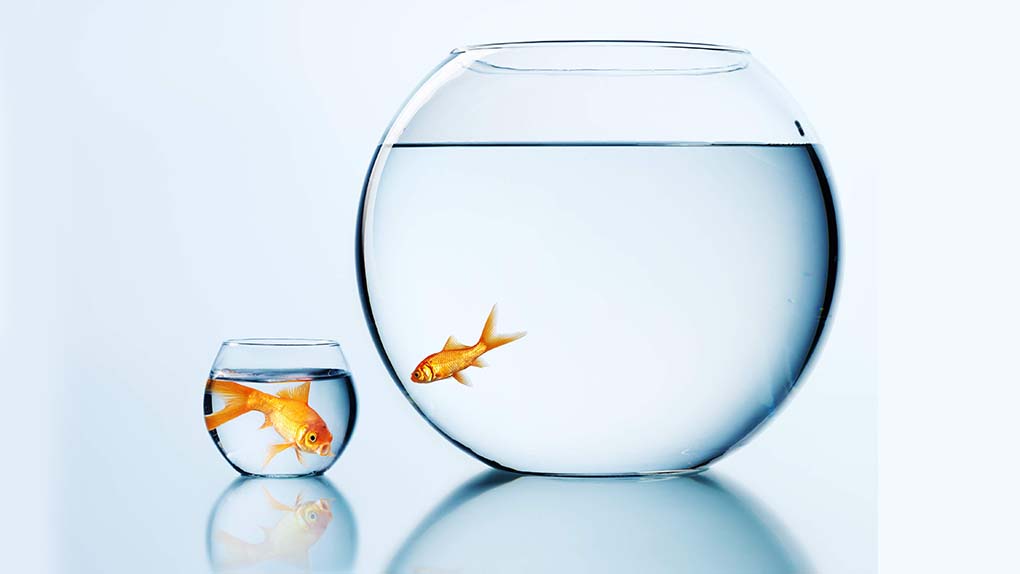
I was the big fish in my pond, the classroom – and I enjoyed it. As a high school educator, I knew my stuff – I had command of my subject, and my students looked to me to enlighten them on all things English, from Shakespeare to Shelley (Percy Bysshe, that is).
Because part of the English curriculum had not changed in a few years, and the method of assessing competence seemed to be similar to what I had experienced as a student in high school, I’d had plenty of time to get to grips with my subject matter. I didn’t see the need to spend extra time learning to upskill myself in my subject. Perhaps inexperience led me to this view, and to reactively wait for my principals to make suggestions about attending workshops that dealt with topics with which they thought I needed more experience.
It was with this view that I entered the corporate world, the Big Pond.
I very quickly met my friend, Reality, who helped me understand that I needed to know my strengths and my development areas and actively seek opportunities to address these if I wanted to survive, and to earn my place in the Big Pond – and I couldn’t expect this to come in the form of a formal qualification that came at a significant cost (I have learned that when businesses are looking for savings, it is often the L&D department that is the first to give back…) I, therefore, had to become interested in the concept of self-driven learning that focused on ‘learning in the flow of life’.
Self-driven learning is not a new concept, but it is becoming increasingly important for those employees who have traditionally looked to their organizations to identify their development needs and book them on training, to make a shift. The shift involves moving from the passive learner to learning journey owner. Employees who do not own their learning journey will fail to upskill themselves sufficiently enough to keep up with their rapidly-changing world, and will struggle to remain relevant in their industry.
With that said, to create a learning culture in an organization and encourage employee accountability, leaders must play an important role – the employee will find their learning journey far more enriching if the line manager supports the process. Leaders who demonstrate a passion for learning set the example for their employees, and essentially give them ‘permission’ to learn. By allowing employees the time to get into the right headspace so that they can engage with the learning content, and support them in applying their learnings, leaders will find a faster adoption of the learning culture They can’t simply pay lip service to this; deliberate meaningful engagements need to take place between line managers and their employees at key points in the learning journey to help integrate the learnings into their environment.
In an ideal world, this would be an organization-wide practice. I acknowledge that creating a sustainable organizational learning culture really is a long-term journey, but we need to start somewhere so that we can start bridging the gap between what we know now, and what we need to know to thrive in the future.
I recently attended the 2020 HR Indaba, and I learned that only 45% of the workforce has sufficient skills for the current environment – this is worrying, considering the number of new skills we need to manage in the future world of work.
According to Jon Foster-Pedley, Dean and Director of Henley Business School Africa, some of those skills include:
- Lean project management
- Team learning
- Value acumen
- Systemic Thinking
- Visualization
- Big picture thinking
- Having a sense of fairness
- Having a sense of purpose
The 2019 Deloitte Human Capital Trends for South Africa identified ‘learning in the flow of life’ as essential to the future of learning. They see three broader trends in how learning is evolving: it is becoming more integrated with work; it is becoming more personal; and it is shifting – slowly – towards lifelong models. 89% of respondents cited this as an important or very important issue. With that context, it would make sense for South African organizations to think about how these trends impact their learning strategy/architecture, and whether they have made provision for the future skills their workforces will need.
I imagine that the transition to a Big Pond is challenging for many employees – especially when it comes to adapting to a new way of learning. There is no single best approach to creating a learning culture because every organization’s appetite for learning and their human capital priorities are different. My view is that to enable the culture of ‘learning in the flow of life’, organisations should take a top-down, bottom-up approach to learning, and that somewhere in the middle is where the magic happens – that point where employee ownership, leadership support and passion for learning meet.