

• About Talenttalks   |
  • FAQ   |
  • Events   |
  • Contact Us
Cart / R0.00

No products in the basket.

My account
Talenttalks
No Result
View All Result
Login
  • Culture & Engagement
  • Diversity
  • Hybrid World
  • Inspire
  • Learning & Performance
  • Magazine
  • Tools
  • Wellbeing
  • Culture & Engagement
  • Diversity
  • Hybrid World
  • Inspire
  • Learning & Performance
  • Magazine
  • Tools
  • Wellbeing
Login
Talenttalks
No Result
View All Result
Home Article

Are you trained for the seat?
Lita Currie by Lita Currie
May 18, 2022
in Article, Learning and Performance
Reading Time: 3 mins read
0
0
SHARES
0
VIEWS

In the aviation industry the crew is trained rigorously.  There are clear and structured procedures to follow in the aircraft.  To deviate from them would be to invite disaster.

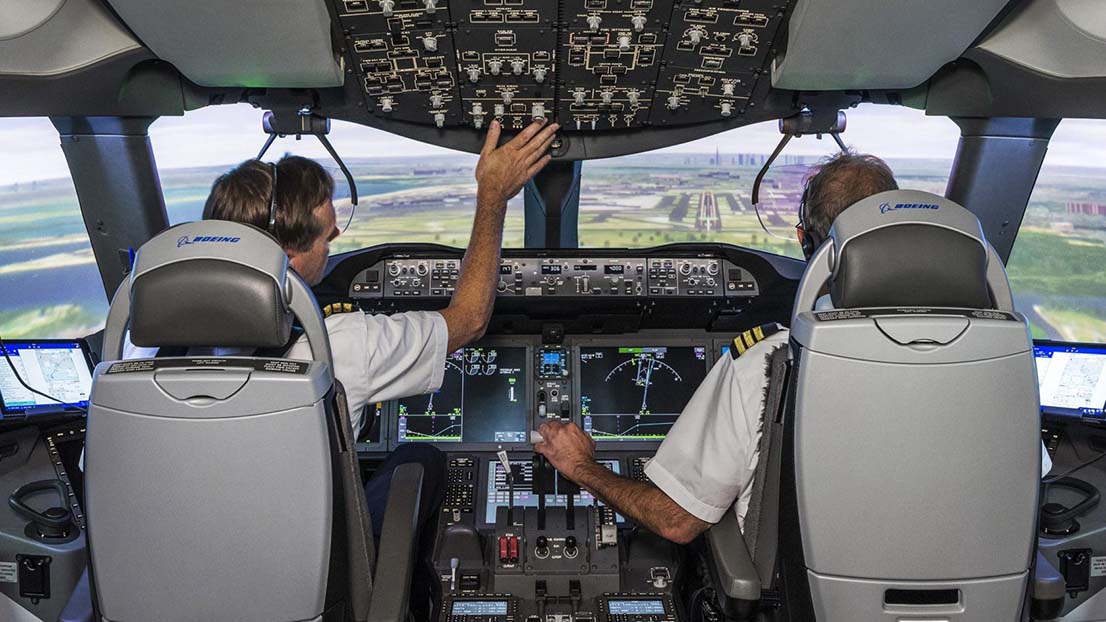
I spent a fascinating afternoon last week with an airline pilot talking about what business could learn from the way they train their people, the processes and procedures they put in place, and the way they execute in the cockpit.  The pilot explained that, specifically between the pilot and the co-pilot, there are strict rules in place about who does what at any given time.  For example, the pilot taxies the plane, the co-pilot engages the brake.  There is no confusion, and there is no overlap in duties.  In this way the aircraft is flown with the highest level of safety for all on board.

A critical part of the training is the concept of being “trained for the seat”.  If you’re a pilot, that’s the “seat” that you’ve trained for.  And it doesn’t follow logically that if you’re the pilot, you can also be a co-pilot.  You haven’t trained for that seat.  In fact, my pilot friend told a horrific story of where a pilot and co-pilot at a local airline decided on a whim to switch over a task during a flight.  A seemingly small change, the pilot suggested to the co-pilot that the former would engage a specific setting as they approached the landing at a coastal city.  The co-pilot, for whatever reason, agreed.

The flight ended in disaster.  Instead of engaging the setting that they had agreed on, the pilot (because of training and muscle memory) engaged the brake, which is what the pilot usually does as part of his standard procedure. This is obviously the last thing you want to do as an aeroplane comes in to land.  All four tyres burst on impact.  The aeroplane came to a screeching halt and was engulfed in flames.  Passengers and crew had to be evacuated.   Fortunately, there were no injuries or fatalities, but it could have played out very differently.  There was massive damage to the aircraft and the company’s reputation.  Both pilot and co-pilot were suspended pending an investigation.

The bottom line is this:  the pilot was trained for his seat, not for the co-pilot’s seat.  When he offered to take over the setting, the co-pilot should have refused.

  1. In business, we should ensure that people are trained for their “seat”. Repetition, practice and continuous learning builds muscle memory and competence.  It should become second-nature.
  2. Don’t let anyone take over your seat without the relevant training and proof of competence. And if someone is stepping over the line onto your seat, have the courage to resist.
Previous Post

Organisations of the future: Renewal

Next Post

Re-Connecting to Self

Lita Currie

Lita Currie

Lita Currie has over 20 years’ experience in learning and development, with expertise in management and leadership. She has trained and consulted in Africa, the UK and north America and has been instrumental in designing and implementing global development programmes across a variety of disciplines, in particular Human Resources, Finance and Corporate Affairs. She is an expert in visual learning and performance management, using graphic facilitation to ensure that the learning is effective.

Related Posts

Conflict as a means of deepening and strengthening relationships
Article

Conflict as a means of deepening and strengthening relationships

March 13, 2023
Shifting Work Practices
Article

Shifting Work Practices

March 13, 2023
Micromanagement vs engagement. How to build team connections while respecting autonomy
Article

Micromanagement vs engagement. How to build team connections while respecting autonomy

March 13, 2023
Like magic – how to solve any problem.
Article

Like magic – how to solve any problem.

March 13, 2023
The poster boy for sustainability
Article

The poster boy for sustainability

March 13, 2023
Putting human back in people
Article

Putting human back in people

March 13, 2023
Next Post

Re-Connecting to Self

Topics

  • Culture and Engagement
  • Diversity
  • Employee Wellbeing
  • Events
  • Inspire
  • Learning and Performance
  • Reflection point
  • Sponsored Article
  • The Hybrid World of Work
  • Tools & Tips

Important Links

About Talenttalks

FAQ

Contact Us

Recent articles

Quick Menu

  • About
  • Culture and Engagement
  • Learning and Performance
  • The Hybrid World of Work
  • Employee Wellbeing
  • Podcasts
  • Events
  • FAQ

Newsletter Signup Form

Select list(s) to subscribe to


By submitting this form, you are consenting to receive marketing emails from: . You can revoke your consent to receive emails at any time by using the SafeUnsubscribe® link, found at the bottom of every email. Emails are serviced by Constant Contact

© Talenttalks Evolve Thinking  |   Privacy Policy   |   Terms and Conditions   |   HTML Sitemap

  • Culture & Engagement
  • Diversity
  • Hybrid World
  • Inspire
  • Learning & Performance
  • Magazine
  • Tools
  • Wellbeing

© Talenttalks Evolve Thinking  |   Privacy Policy   |   Terms and Conditions   |   HTML Sitemap

This website uses cookies. By continuing to use this website you are giving consent to cookies being used. Visit our Privacy and Cookie Policy.