

Building Future Fit Teams: Building Industry 4.0 fit EQ
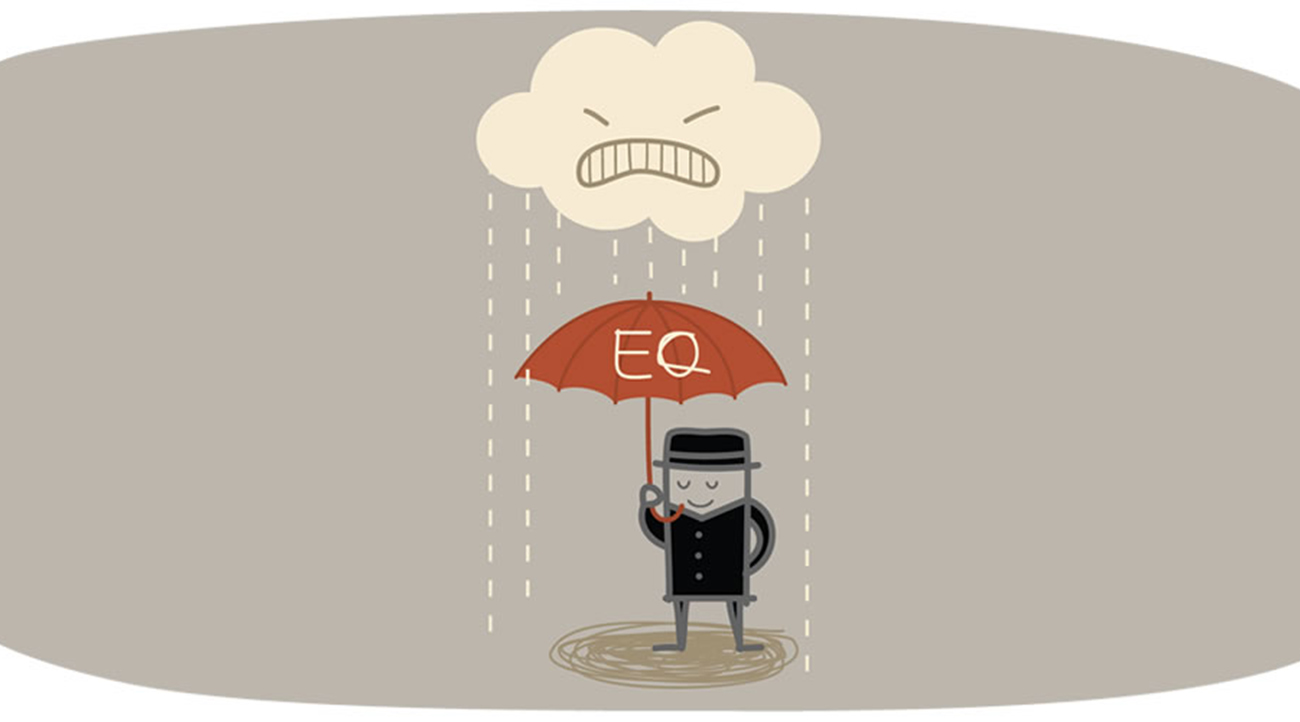
According to the World Economic Forum, Future Jobs report Emotional Intelligence is listed as the 6th most critical skill for 2020. What is very interesting to note is that this skill did not even feature on their 2015 critical skills list.
So why the sudden criticality, especially when fewer jobs will be performed by humans?
Because, as increased automation comes into play, robots will increasingly take over the logical, and administrative tasks. Pretty much anything that can be process flowed can be automated through the development of a few key algorithms. That then leaves us with the other stuff, the creating, collaborating, innovating. This requires high levels of EQ.
Before the advent of industry 4.0 EQ was an important skill to develop, but it was mainly reserved for those aspiring to leadership positions. For the rest, it was a nice to have but not a key developmental area.
However, as more of our job families become either completely or partially automated our ability to connect, relate and create with others will be the final human frontier. The only space in which we as a species remain economically relevant.
According to Mark Spelman, Executive Committee Member at The World Economic Forum and Co-Head of its Future of the Internet Initiative, in an article for Critical Eye, technology is bringing great change but this does not mean that humans will be become irrelevant. He goes on to explain that those skills that make us uniquely human, what he calls the “creative skill set” will take centre stage. In his view it’s not us against the machines but rather us with machines.
We have already and will continue to build machines that will outsmart us in every possible way, if we take an ‘us versus them’ approach then we have already lost.
Instead we need to recognise the strengths that AI will bring and decide how we augment ourselves with these. The question we should be asking is what we can do with this technology, how can we better serve humanity, our shareholders, ourselves?
This means developing EQ skills that not only improve our ability to collaborate and relate to other humans but also enable us to embrace the hybrid. How can we improve our EQ to engage and motivate hybrid teams, how will we live and work with robots?
As we know EQ refers to our ability to know ourselves well enough to understand and manage our emotions in relationship to others. It is what I like to call “perfecting the pause” giving ourselves time to move through our reptilian brain, into our rational brain before responding.
According to Talent Smart, as quoted in Psychology Today, “90% of high performers at the work place possess high EQ, while 80% of low performers have low EQ. Emotional Intelligence is absolutely essential in the formation, development, maintenance, and enhancement of close personal relationships. Unlike IQ, which does not change significantly over a lifetime, our EQ can evolve and increase with our desire to learn and grow.”
So what can we do to help ourselves and our teams become increasingly Emotionally Intelligent?
Firstly we cannot hope to improve our EQ in the absence of feedback and reflection. We have to take the time to reflect on our strengths and areas where we can still grow, and we can only do this through asking for feedback. As the leader of the team it is important that you have robust, frequent and bi-directional feedback sessions with your team. This encourages the development of deeper levels of self-awareness whilst building strong foundations of honesty and transparency, key to fostering collaboration.
Secondly, it is important that we understand and are able to identify our ‘derailers.’ Our derailers are what stop us from reaching our true potential. I like to think of them as strengths but when overused or expressed unchecked, become a drawback. Think of someone characterised as ‘excitable’. This is a great strength especially when we are needing team motivation, however an excitable person with low emotional intelligence is often experienced as volatile, emotional…high drama! Learning to recognise our derailers and the impact they have is important and should be discussed and highlighted during your feedback sessions.
Finally, reflection is your secret weapon. It is not enough to only give and receive feedback. You need to take the time to digest it, analyse it and most importantly decide what to do about it. To reflect on the feedback you receive means to ask yourself ‘how do I need to adjust my behaviour in future?’ You should be asking your team members to answer the exact same question and hold them accountable to this if you really want to see development in this area.
Modifying our behaviour through reflecting on feedback received is one of the key areas in which we can use AI in future to help us build deeper EQ skills. We are already doing this for health, increasingly using wearable technology to monitor and modify our behaviour; think Fitbit or your Apple watch linked to Discovery Health. I am sure I am not the only one pacing up and down my passage before bed trying to close my exercise ring for the day and thereby earn myself a free coffee at Kauai? So in a few short years I am sure I’ll be monitoring and modifying my emotional reaction as I interact with a humanoid over a single cup of coffee.