

• About Talenttalks   |
  • FAQ   |
  • Events   |
  • Contact Us
Cart / R0.00

No products in the basket.

My account
Talenttalks
No Result
View All Result
Login
  • Culture & Engagement
  • Diversity
  • Hybrid World
  • Inspire
  • Learning & Performance
  • Magazine
  • Tools
  • Wellbeing
  • Culture & Engagement
  • Diversity
  • Hybrid World
  • Inspire
  • Learning & Performance
  • Magazine
  • Tools
  • Wellbeing
Login
Talenttalks
No Result
View All Result
Home Article

Are You Smarter Than a Neural Network?
Ekow Duker by Ekow Duker
May 18, 2022
in Article, Learning and Performance
Reading Time: 3 mins read
0
0
SHARES
0
VIEWS

Last week I was invited by the resourcing department of a large international bank to give a talk on The Future of Artificial Intelligence. We soon entered into an animated discussion on how clever artificial intelligence or AI algorithms really are.

Let’s focus on artificial neural networks for a moment. Artificial neural networks are by no means the only AI method in use today. However neural networks are perhaps the technique that receives the most contemporary press and is guiding – and simultaneously misinforming –  the debate about AI.

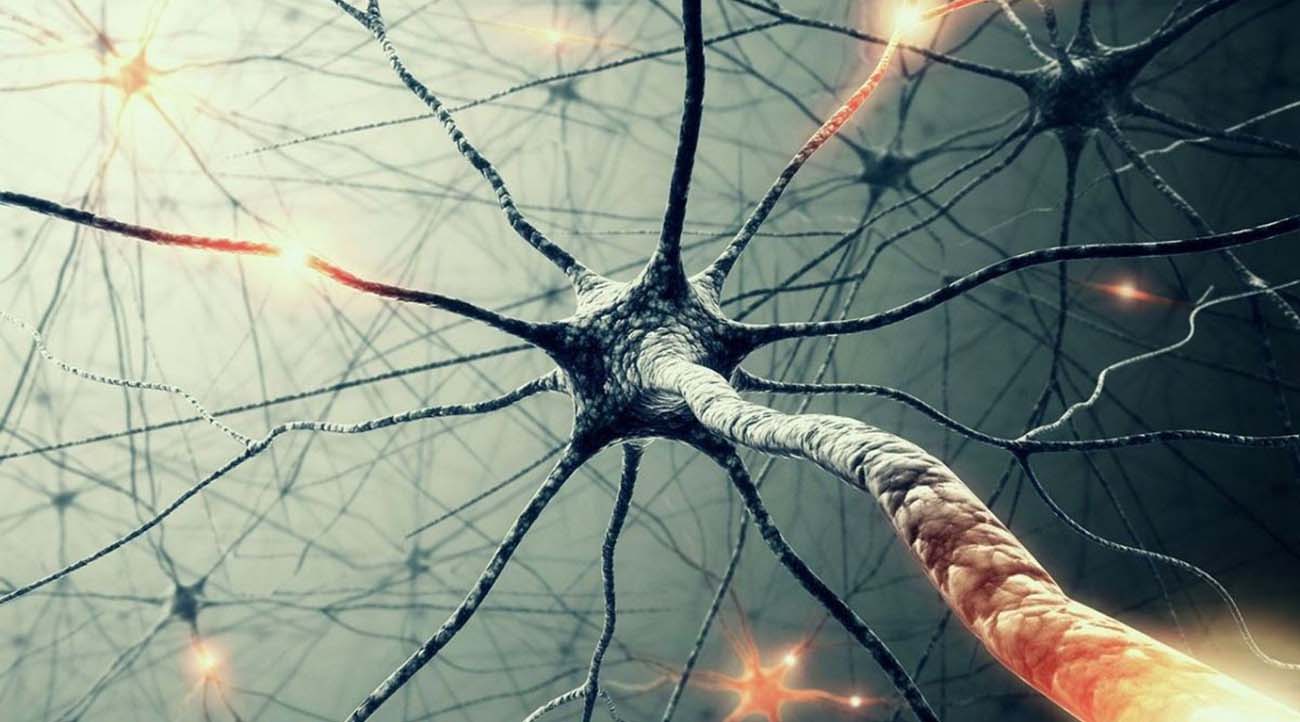
Artificial neural networks are loosely modelled on the human nervous system where an input (e.g. a telltale smell of smoke) is translated into an output response (e.g. sound the alarm). This happens when the input breaches a certain threshold.

Crudely put, the more neurons a nervous system has, the smarter it appears to be. As illustrated below, a human brain is much more evolved than the brain of a cat. This allows humans to do things a cat could never do. And with the exception of William Hanna and Joseph Barbera’s Tom and Jerry cartoons, a cat is in turn, smarter than a mouse, and a mouse smarter than a cockroach, which is smarter than a fly. The number of neurons plays a large role in this hierarchy.

Similarly, the more intricate an artificial neural network’s topology, or the more neurons it has, the more complex the problems it is able to tackle. These range from classifying mushrooms as edible or poisonous from a set of input characteristics, to managing the energy grid of an entire city.
  
When asked how many neurons state of the art artificial neural networks typically have today, the audience’s responses from last week’s talk ranged from a bullish, ’many more than a human’, to a tentative, ‘somewhere around a fruit fly’. It turns out that the latter response is closer to the truth.

For all their enormous versatility and promise, AI algorithms today perform relatively simple tasks. These include image recognition, text translation and even piloting autonomous cars. The AI that classifies mushrooms as edible or poisonous, has no notion of what a mushroom is. It simply takes a set of items with certain attributes and labels them as ‘edible’ and labels another set of items with a different combination of attributes, as ‘poisonous’. A truly sentient machine, one that falls in love, laughs, experiences sorrow and can be driven to great heights of achievement by hope alone, is still a long way off.

So what is the future of AI? This is somewhat analogous to the central question in The Hitchhiker’s Guide to the Galaxy by Douglas Adams. That question of course, was, ‘What is the answer to the ultimate question of life, the universe and everything?’ The answer to that question was, ’42’. Or in other words, nobody really knows.

Previous Post

Building Future Fit teams: Creativity

Next Post

Insights into a young Entrepreneur who is cleaning up

Ekow Duker

Ekow Duker

Ekow Duker Oil field engineer turned banker turned writer, EKOW DUKER grew up in Ghana and studied in the UK, the US and France.

Related Posts

Conflict as a means of deepening and strengthening relationships
Article

Conflict as a means of deepening and strengthening relationships

March 13, 2023
Shifting Work Practices
Article

Shifting Work Practices

March 13, 2023
Micromanagement vs engagement. How to build team connections while respecting autonomy
Article

Micromanagement vs engagement. How to build team connections while respecting autonomy

March 13, 2023
Like magic – how to solve any problem.
Article

Like magic – how to solve any problem.

March 13, 2023
The poster boy for sustainability
Article

The poster boy for sustainability

March 13, 2023
Putting human back in people
Article

Putting human back in people

March 13, 2023
Next Post

Insights into a young Entrepreneur who is cleaning up

Topics

  • Culture and Engagement
  • Diversity
  • Employee Wellbeing
  • Events
  • Inspire
  • Learning and Performance
  • Reflection point
  • Sponsored Article
  • The Hybrid World of Work
  • Tools & Tips

Important Links

About Talenttalks

FAQ

Contact Us

Recent articles

Quick Menu

  • About
  • Culture and Engagement
  • Learning and Performance
  • The Hybrid World of Work
  • Employee Wellbeing
  • Podcasts
  • Events
  • FAQ

Newsletter Signup Form

Select list(s) to subscribe to


By submitting this form, you are consenting to receive marketing emails from: . You can revoke your consent to receive emails at any time by using the SafeUnsubscribe® link, found at the bottom of every email. Emails are serviced by Constant Contact

© Talenttalks Evolve Thinking  |   Privacy Policy   |   Terms and Conditions   |   HTML Sitemap

  • Culture & Engagement
  • Diversity
  • Hybrid World
  • Inspire
  • Learning & Performance
  • Magazine
  • Tools
  • Wellbeing

© Talenttalks Evolve Thinking  |   Privacy Policy   |   Terms and Conditions   |   HTML Sitemap

This website uses cookies. By continuing to use this website you are giving consent to cookies being used. Visit our Privacy and Cookie Policy.